

Shilajit Lab Reports and COA for Every Batch
Third-party testing in the US, Europe and Pakistan. Real heavy metal numbers, not just a pass stamp.
What every batch report includes
- Heavy metalsLead, arsenic, cadmium and mercury as real numbers with detection limits. Results consistently pass WHO, FDA and California Prop 65 thresholds across labs and years.
- MicrobiologyTotal plate count, yeast and mould, E. coli and Salmonella.
- Fulvic & humic acidWith the method named. Recent IAS Laboratories reports show fulvic acid between 82.5% and 86.6%.
- TraceabilityLab name, batch number, report number and test date.
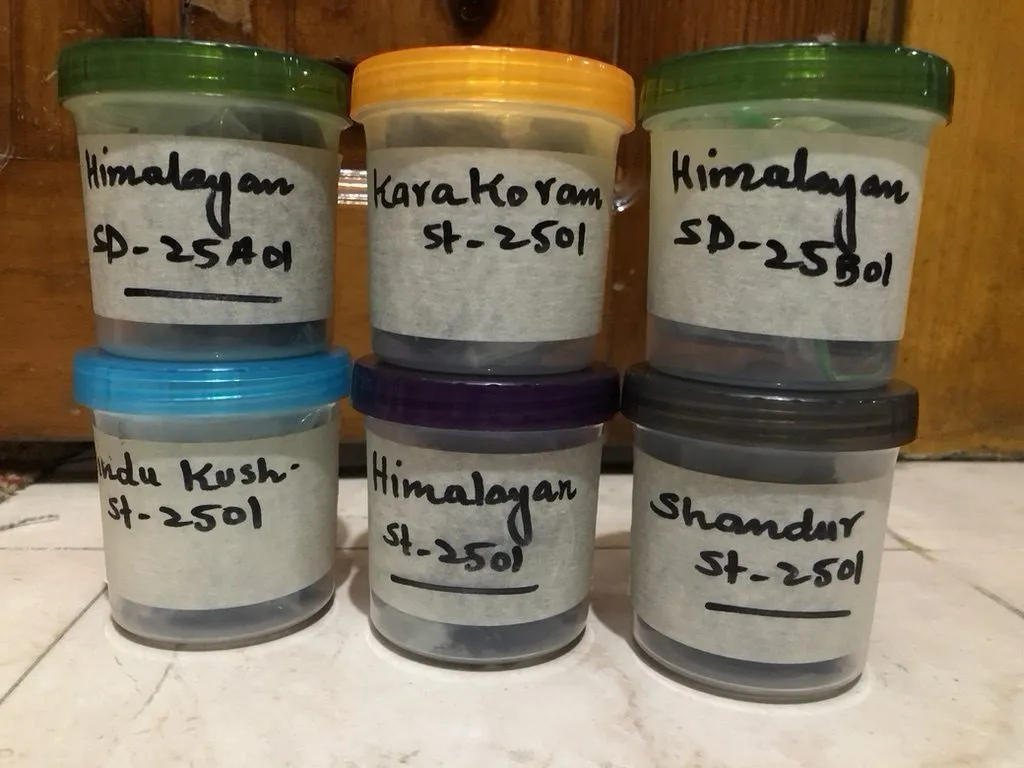
Where our shilajit is tested
About three years of testing by region, rock type and processing method, across labs on three continents.
IAS Laboratories
Arizona, USA. Our main lab.
Certified Laboratories
California, USA.
MicroQuality Labs
California, USA.
Eurofins
Sweden and Norway.
NLZOH
Slovenia.
GBA Polska
Poland.
PCSIR
Pakistan.
Use your own lab
You are welcome to send our material to the lab of your choice before ordering in bulk.
Five things to check on any shilajit lab report
- Real numbers, not "pass". Lead, arsenic, cadmium and mercury should be reported as values with the lab's detection limit. "ND" means below that lab's detection limit, not zero.
- The method matters. In one of our batches, a lab using an older method (AAS) found only lead at 0.04 ppm, while an ISO/IEC 17025 lab using ICP-MS measured lead 1.10, arsenic 1.16, cadmium 0.042 and mercury 0.008 ppm. Ask which method was used.
- Fulvic acid is not one number. The same sample read 82%, 56% and 61% at different labs. Never judge shilajit on fulvic acid alone.
- Reports that look too perfect. Identical numbers batch after batch are a warning sign.
- Confirm it with the lab. Match the batch number to your order, check the date and report number, and call the named lab to confirm the report is genuine.
Questions about shilajit testing
Yes. Every batch is tested by a third-party lab and the report travels with your order.
IAS Laboratories (USA, our main lab), Certified Laboratories and MicroQuality Labs (USA), Eurofins (Sweden and Norway), NLZOH (Slovenia), GBA Polska (Poland) and PCSIR (Pakistan).
Lead, arsenic, cadmium and mercury, reported as numbers with detection limits. Thallium is rarely tested but worth asking about.
ND means not detected, which is below that lab's detection limit. It does not mean zero.
Fulvic acid is measured with different methods, and each gives a different number. One of our samples read 82%, 56% and 61%. Ask which method was used.
Yes. Order a paid sample kit, test it wherever you like, and the sample cost is credited against your first bulk order.
Want the latest batch report?
Tell us the format and volume you are considering and we will send the current lab report for that material.